
On the U.S. Economy, Government Debt and more
Last week, U.S. Federal Reserve Chair Jerome Powell, during a press conference, said:
"The economy is strong overall... inflation has eased substantiallyfrom a peak of 7 percent to 2.1 percent as of September ...
“The labor market ... remains solid
"The unemployment rate...remains low at 4.1 percent in October."
“Growth of consumer spending has remained resilient, and investment in
equipment and intangibles has strengthened."Activity in the housing sector has been weak.
“The level of our debt relative to the economy is not unsustainable … it is ultimately a threat to the economy ... we don't have oversight over fiscal policy.
When ask: “Do you believe that the president has the power to fire or demote you?", he said it is "not permitted under the law."
Separately, the U.S. Congressional Budget Office (CBO) report ”An Update to the Budget and Economic Outlook: 2024 to 2034” (June 2024) said:
"If no new legislation affecting spending and revenues is enacted, the budget deficit for fiscal year 2024 will total $1.9 trillion ...
"As a percentage of GDP, debt is projected to reach 109 percent in 2028, an amount greater than at any point in the nation's history. Debt would continue increasing over the remainder of the projection period, equaling 122 percent of GDP at the end of 2034"
The chart below presents U.S. debt as a percentage of GDP: 1900 to 2034 (projected).
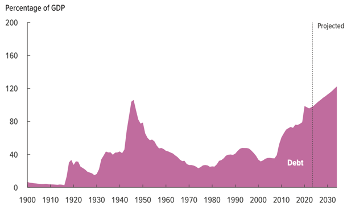
Source: U.S. Congressional Budget Office
OUR TAKE
The US economy has significantly improved, but concerns about fiscal sustainability need to be addressed through congressional actionrather than Federal Reserve policy.
Factors driving U.S. national debt include an aging population requiring increased Social Security benefits, rising healthcare costsparticularly in Medicare and Medicaid, and growing interest paymentsrequired to service existing debt obligations.
Historically, the Federal Reserve has had operational independence while being accountable to Congress, but recent debates about its oversight could impact market confidence and economic stability.